


How to Fix a Noisy Garage Door in Coppell Homes
April 2, 2026
Coppell Garage
Garage Door Specialists
A garage door that suddenly starts grinding or squealing at 6 a.m. usually signals more than minor wear. At Coppell Garage, we’ve been helping homeowners diagnose and solve these issues for years of experience, and we’ve noticed the noise almost always points to a specific mechanical problem. Just last month in Coppell, a homeowner called about a “small rattle” that turned out to be a loose track bracket pulling from the framing. Ignoring the sound often leads to bigger repairs. A door that jerks or scrapes can strain the opener, bend tracks, or snap a torsion spring. Our garage door repair guide explains why early action prevents expensive damage.
What Quality Garage Door Service Should Include
Quieting a garage door requires more than spraying lubricant on moving parts. Proper repair means correcting the mechanical source of friction, imbalance, or vibration. We approach noisy systems by restoring factory-level performance and verifying safety compliance. Strong professional service typically includes:
- Precision torsion spring adjustment using calibrated winding bars.
- Replacement of worn steel rollers with 10- or 13-ball bearing nylon rollers.
- Application of silicone-based or lithium-based lubricant (never WD-40) to hinges, rollers, and springs.
- Torque checks on track brackets, flag brackets, and center bearing plates.
- Opener force and travel limit adjustments per manufacturer guidelines.
Stopping Noise Before It Becomes Structural Damage
Most noisy doors start with gradual wear that routine maintenance would have caught. We recommend a professional inspection at least once a year and lubrication every six months, especially for doors used as primary entry points. A customer once ignored a mild popping sound for nearly a year. By the time we inspected the system, the torsion spring had developed a visible separation gap. The repair expanded from a simple adjustment to a full spring replacement and cable reset. Typical repair costs may range from:
- $125 – $250 for roller replacement.
- $150 – $350 for track realignment and hardware tightening.
- $200 – $500 for torsion spring replacement.
Schedule a Detailed Garage Door Inspection
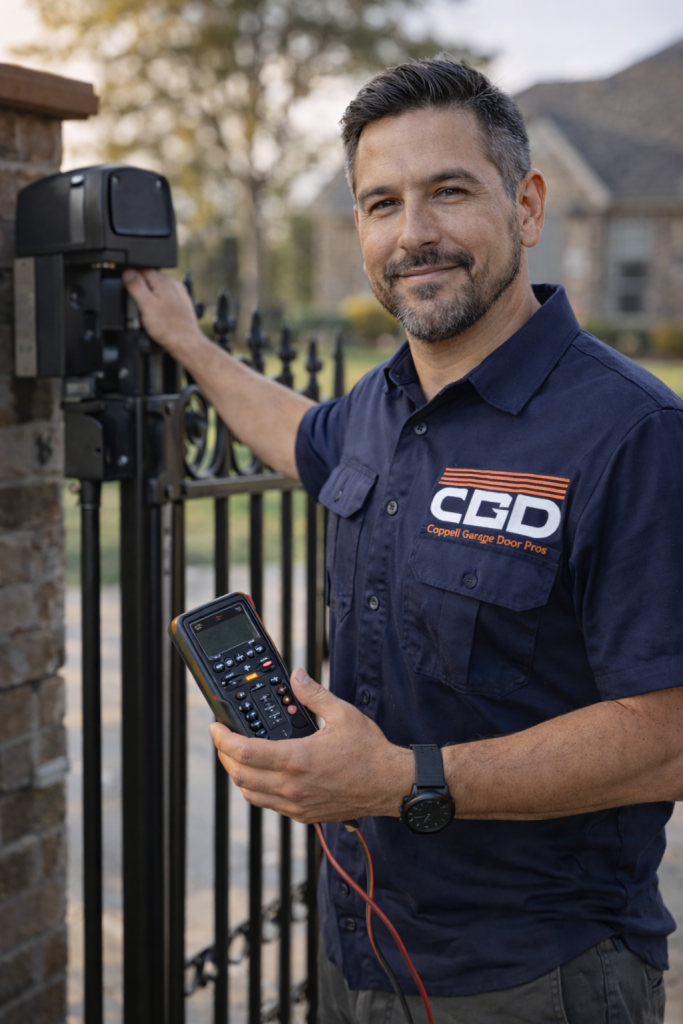
If your garage door has started squeaking, grinding, or rattling, the sound is telling you something specific. We provide detailed system inspections that identify worn components, balance issues, and alignment problems before they escalate. Our team uses professional-grade tools to restore smooth, quiet operation while verifying safety compliance. A focused evaluation today can prevent opener damage, spring failure, and unexpected downtime. Schedule an inspection and get clear answers about what your system needs to operate safely and quietly.
Frequently Asked Questions
Why is my garage door suddenly louder than before in Coppell?
Sudden noise usually points to a change in one component rather than general aging. In Coppell, temperature swings can cause metal contraction and expansion, loosening hardware or reducing lubrication effectiveness. Dry rollers, fatigued torsion springs, or a misaligned track commonly create squealing or grinding sounds. If the door also feels heavier when lifted manually, the spring tension may be weakening. We recommend disconnecting the opener and testing the door’s balance. If it does not stay halfway open on its own, the system likely needs adjustment. Addressing the issue early prevents excess strain on the opener motor and drive gear.
What type of lubricant should be used on a noisy garage door?
Use a silicone-based or white lithium grease specifically labeled for garage doors. These products reduce friction without attracting excessive dust. Avoid general-purpose sprays like WD-40 because they act as degreasers and can strip protective lubrication from bearings. Apply lubricant to hinges, roller bearings, torsion springs, and the center bearing plate – never to the track surface itself. Tracks should remain clean and dry to maintain proper roller guidance. In high-use households, lubrication every six months is usually sufficient. If noise persists after correct lubrication, mechanical wear or balance issues may be the root cause.
How much does it cost to fix a noisy garage door in Coppell?
The cost to fix a noisy garage door may range from $125 for minor roller or hardware adjustments to $500 or more for torsion spring replacement. Track repairs or bearing replacements typically fall somewhere in between. Pricing can fluctuate based on site complexity, material costs, and total scope of work. A simple lubrication and tune-up might take about an hour, while spring or cable replacements could require two to three hours including safety calibration. Accurate pricing depends on inspection findings and door size. These figures are preliminary benchmarks for informational purposes only and do not constitute a binding quote. An on-site evaluation is required for a final proposal.
Can I fix a noisy garage door myself, or should I call a professional?
Homeowners can safely handle basic lubrication, tightening visible bolts, and clearing debris from tracks. Those tasks require minimal tools and low risk. However, spring adjustments, cable repairs, and track realignment involve stored tension and specialized winding bars. Torsion springs are under significant load and can cause serious injury if mishandled. If the door feels heavy, jerks during travel, or slams shut, professional service is the safer option. We encourage homeowners to attempt only low-risk maintenance tasks and schedule service for anything involving spring tension or structural alignment.
What are the early warning signs that my garage door needs maintenance?
Early warning signs include intermittent squeaking, slight hesitation when opening, uneven gaps between rollers and track, and visible rust on springs. You might also notice vibration in the opener rail or minor shaking in the door panels. A balanced door should stay in place when lifted halfway manually. If it drifts up or down, the spring tension needs evaluation. Inspect cables for fraying and check that brackets remain tightly secured to framing. Catching these signs early prevents accelerated wear on the opener motor and reduces the risk of sudden component failure.
Are there common garage door problems specific to Coppell homes?
In Coppell, heat and humidity cycles can affect lubrication and slightly shift framing around garage openings. We often see track brackets loosen as wood framing expands and contracts over time. Homes with insulated steel doors may also experience panel vibration if reinforcement struts loosen. Dust accumulation can increase roller friction, especially in high-traffic garages used as primary entrances. Regular inspections help counter these climate-related effects. Adjusting hardware and maintaining lubrication schedules tailored to local conditions keeps systems operating smoothly and quietly.
What should I look for when hiring a garage door repair company?
In Coppell, heat and humidity cycles can affect lubrication and slightly shift framing around garage openings. We often see track brackets loosen as wood framing expands and contracts over time. Homes with insulated steel doors may also experience panel vibration if reinforcement struts loosen. Dust accumulation can increase roller friction, especially in high-traffic garages used as primary entrances. Regular inspections help counter these climate-related effects. Adjusting hardware and maintaining lubrication schedules tailored to local conditions keeps systems operating smoothly and quietly.
When does a noisy garage door become urgent?
Noise becomes urgent if it is paired with jerking movement, sagging cables, or a door that will not stay open halfway. A loud bang may indicate a broken torsion spring, which requires prompt service. If the opener strains or stops mid-cycle, discontinue use to prevent motor burnout. Homeowners can safely unplug the opener and avoid cycling the door until inspection. While most noise issues are not immediate emergencies, sudden changes in performance justify quick scheduling to prevent additional mechanical damage.