


Coppell Garage Door Pros - Garage Door Experts Services in Coppell
January 22, 2026
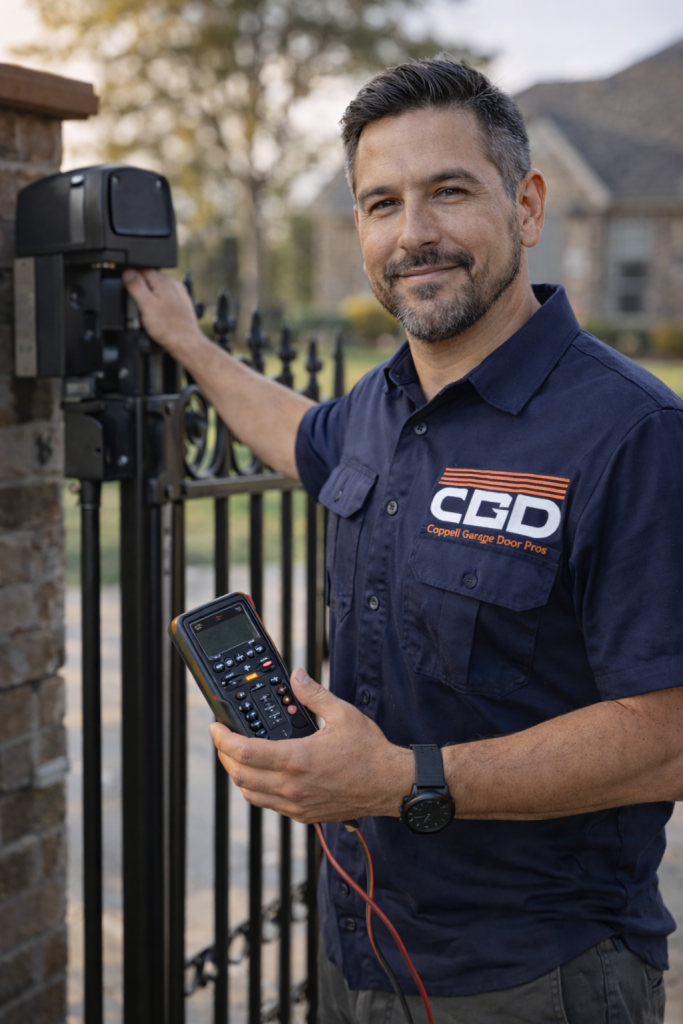
Carlos Mendez
Lead Gate Specialist
My name is Carlos Mendez, and over my years of experience as a Lead Gate Specialist, I’ve noticed homeowners often ignore small garage door issues until the door stops moving altogether. Most problems give clear warning signs – grinding noises, uneven movement, or delayed response – that get dismissed as “normal.” I’ll break down what those signs actually mean and how to address them correctly. I’ve also seen the financial fallout of neglect. One homeowner kept forcing a door with a failing spring, which eventually snapped and damaged the opener rail and vehicle hood. That repair cost several times more than early service. For a deeper overview, I often point homeowners to our garage door repair guide before problems escalate.
What Quality Garage Door Service Should Always Include
Effective garage door troubleshooting follows clear professional standards. I focus on mechanical integrity first, safety systems second, and convenience features last. Skipping that order leads to repeat failures. DASMA and the International Residential Code (IRC) both require that garage doors operate smoothly without excessive force. In practice, that means a force gauge test at the opener and photo-eye reversal testing. When I evaluate a door, quality service includes:
- Spring cycle assessment – estimating remaining cycles based on wire size and door weight.
- Opener force calibration – confirming the door reverses with minimal resistance.
- Fastener torque checks – hinges and track brackets tightened to manufacturer specs.
What Homeowners Should Do - and Avoid - During Garage Door Troubleshooting
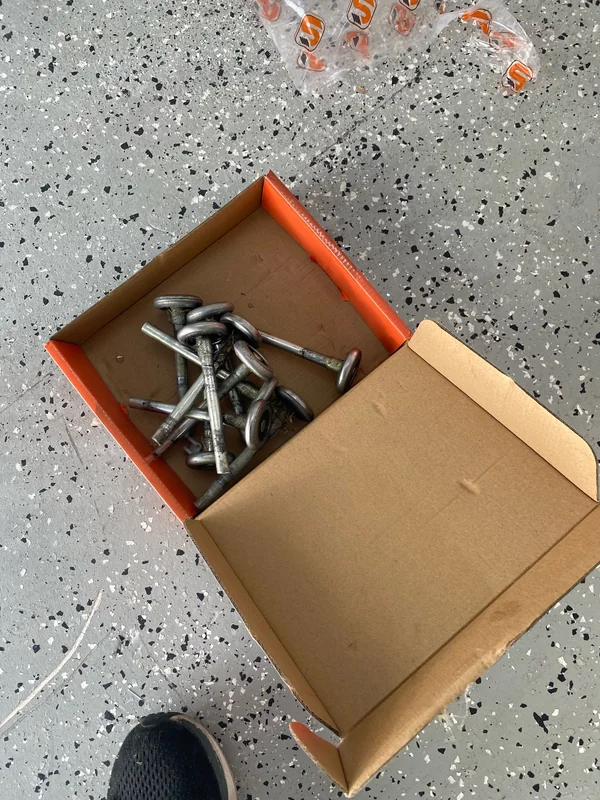
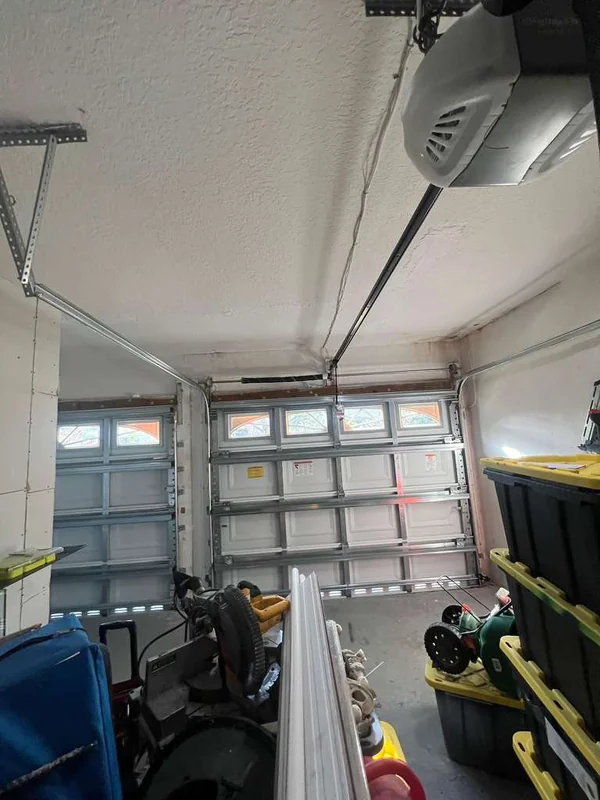
Most recurring garage door problems come from well-intended but incorrect maintenance. I’ve seen homeowners create costly damage by guessing instead of measuring. A client once tried tightening track bolts to stop noise. They crushed the vertical track inward, causing roller binding and cable derailment. DO:
- Test door balance twice a year – This confirms springs are carrying the load, not the opener.
- Use silicone-based lubricant on rollers and hinges – This reduces friction without attracting debris.
- Visually inspect cables monthly – Early fraying is easier and cheaper to correct.
- Adjust torsion springs without bars – Improvised tools can slip and cause serious injury.
- Ignore slow opening speeds – This often signals spring fatigue, not opener failure.
- Replace opener parts before confirming door weight – Misdiagnosis wastes money.
Get Clear Answers Before Small Issues Become Big Repairs
If your garage door is noisy, slow, or unreliable, now is the time to act. I am Carlos Mendez, and I help Coppell homeowners restore safety, quiet operation, and peace of mind fast. A professional inspection today can stop small issues from becoming costly failures tomorrow. Call now to protect your family, your vehicle, and your schedule. For added confidence, visit our Booking Page, then book service today. Appointments fill quickly, and same day solutions are available when you contact us now.
Frequently Asked Questions
Why does my garage door stop halfway?
A door that stops mid-travel is often a clear sign of balance or force related problems within the system. In my experience, the most frequent causes include worn or weakened springs, misaligned tracks, or rollers that no longer move smoothly. When the opener detects extra resistance, it automatically shuts down as a safety measure to prevent damage or injury. I usually recommend disengaging the opener and carefully lifting the door by hand. If the door feels unusually heavy, moves unevenly, or will not stay in place when partially open, the spring system likely needs professional adjustment or full replacement to restore proper operation.
What causes loud grinding or popping noises?
Grinding noises usually indicate dry rollers, worn bearings, or track misalignment that forces metal parts to scrape under load. Popping or snapping sounds more often point to torsion springs binding on the shaft or shifting because of improper spacing. To correct these issues, I apply a silicone-based lubricant to all moving components, inspect roller wear, and confirm that the tracks are plumb and securely fastened. I also verify that the springs are evenly spaced and properly seated on the shaft. Ignoring these warning sounds accelerates metal fatigue, increases stress on the opener, and raises the risk of sudden spring failure, which is both dangerous and expensive to repair.
How much does garage door repair usually cost?
Garage door repairs can vary widely in cost, starting at a few hundred dollars for simple adjustments or minor component replacements and increasing for more involved services such as spring, cable, or track replacement. Final pricing depends on several factors, including the complexity of the installation site, the type and quality of materials required, door size and weight, and the overall scope of the work being performed. Most standard repairs are typically completed within 1 – 2 hours, although more complex issues may require additional time. All pricing and time estimates are provided as general guidelines for planning purposes only and should not be considered a fixed or binding quote. A professional on-site evaluation is necessary to accurately diagnose the issue, confirm repair requirements, and deliver a final, detailed proposal.
Can I fix garage door problems myself?
Basic tasks such as sensor cleaning, tightening visible hardware, or performing a careful visual inspection are reasonable responsibilities for homeowners. These simple checks can help identify obvious issues without placing anyone at risk. However, I do not recommend attempting DIY spring or cable work under any circumstances. Springs and lift cables are under high tension and store a large amount of energy, which can release suddenly if handled incorrectly. This can lead to serious injury or costly property damage. When a problem affects door balance, lifting force, or smooth operation, professional service is the safest and most reliable choice. Trained technicians have the tools, experience, and knowledge to complete repairs correctly and restore proper function.
What maintenance helps prevent problems?
Regular lubrication, balance testing, and careful visual inspections are the foundation of preventing most garage door failures. Homeowners should apply appropriate lubricant to rollers, hinges, and springs to reduce friction and corrosion. Balance testing helps confirm that the door is properly counterweighted and not placing unnecessary strain on the opener. I also advise listening for changes in sound, such as grinding or squealing, and watching for uneven or jerky movement during operation. Catching these signs early allows small adjustments or repairs before major damage occurs, extending the life of the system and keeping the door compliant with current safety standards.
What are the most common garage door problems?
The issues I see most often include broken springs, frayed cables, misaligned tracks, and sensor misalignment, all of which can seriously compromise safety and day to day reliability. Broken springs place excessive strain on the opener, while damaged cables can cause uneven lifting or sudden door drops. Track alignment problems lead to noisy operation and accelerated wear on rollers and panels. Sensor issues may prevent proper closing or create false reversals. Addressing these concerns promptly reduces the risk of accidents, prevents secondary damage to openers and door panels, and extends the overall lifespan of the system. Regular inspection and timely repairs help ensure smooth, dependable operation.
What should I look for when hiring a garage door professional?
The issues I see most often include broken springs, frayed cables, misaligned tracks, and sensor misalignment, all of which can seriously compromise safety and day to day reliability. Broken springs place excessive strain on the opener, while damaged cables can cause uneven lifting or sudden door drops. Track alignment problems lead to noisy operation and accelerated wear on rollers and panels. Sensor issues may prevent proper closing or create false reversals. Addressing these concerns promptly reduces the risk of accidents, prevents secondary damage to openers and door panels, and extends the overall lifespan of the system. Regular inspection and timely repairs help ensure smooth, dependable operation.
When should I schedule urgent service?
If the door will not open, slams shut unexpectedly, or shows visible cable damage, stop using it immediately and arrange professional service as soon as possible. Continuing to operate a malfunctioning door can place strain on springs, tracks, and the opener, leading to more serious and costly repairs. Secure the door in a closed position if you can do so safely, and avoid repeated attempts to force it open or closed. These warning signs often point to underlying mechanical failure, which can escalate quickly and create safety risks for people, vehicles, and property if left unaddressed.